A deeper look at the projects, platforms, and initiatives that are transforming African education and publishing.
Accessible Studybase is a revolutionary educational platform designed to reshape teaching and learning in Nigeria. Born from the COVID-19 pandemic's revelation that technology was essential for educational publishing, it represents the culmination of years of vision and development.
The platform's launch theme — "Leverage Technology to Enhance Learning and Reduce School Operational Cost" — captures its dual mission: better education and more efficient schools.
Curriculum-based content aligned with NERDC standards, enabling self-directed learning for all subjects.
Enrollment, student/teacher profiling, attendance management, and online payments in one platform.
Rich interactive lessons that go beyond traditional textbooks, engaging learners through multiple formats.
Nigeria's first AI-powered digital textbook (2025) — intelligent, adaptive learning for every student.
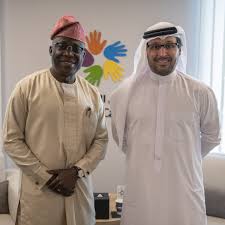
The African Publishing Innovation Fund (APIF) is a grant programme co-led by Dubai Cares and implemented by the International Publishers Association. Gbadega was instrumental in its creation — he raised the need for capacity development in Africa during IPA meetings, which birthed the entire IPA Africa Seminar Series and ultimately led to this landmark fund.
Total Fund
Programme Duration
Countries Applied
Young Africans Impacted
APIF provides catalytic funding to scalable, cutting-edge African publishing innovations through thematic calls for proposals. In 2021 alone, 5 projects across Africa received $170,000 in funding.
The fund operates within the framework of the Lagos Action Plan — 5 Transformation Goals developed under Gbadega's leadership:
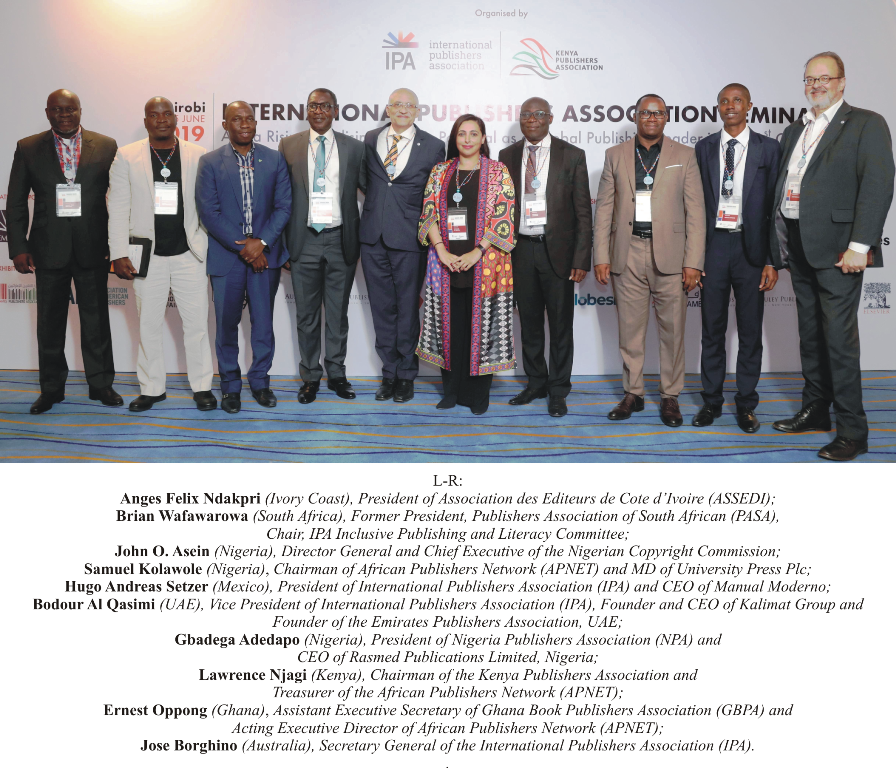
The IPA Africa Seminar Series represents the International Publishers Association's first dedicated engagement with the African continent. Gbadega co-organized and opened both landmark events.
Beyond building companies and platforms, Gbadega has been a tireless advocate for systemic change in Nigeria's publishing industry. His advocacy spans policy reform, anti-piracy measures, and digital transformation.
Consistently pushed for the implementation of a functional National Book Policy to guide the industry's development and protect stakeholders.
Advocated for a new Copyright Act that addresses digital-era challenges while protecting creators' rights. Worked with Nigerian Copyright Commission Director General John Asein.
Vocal opponent of book piracy, warning that if unchecked, "Things Fall Apart" (paraphrasing Chinua Achebe). Called on government to take decisive action.
In 2019, called for "a campaign of acceptability for digital reading" — described as being ahead of most African publishing leaders at the time.
Pushed for investment in modern printing technology and equipment to reduce dependence on imports and lower production costs.
Presented "Building Synergy Between Printers and Publishers for Improved Local Production in Nigeria" at the 2023 International Print Expo.
"For the industry to thrive, there must be implementation of a functional National Book Policy and new Copyright Act, stronger collaboration among players, investment in modern printing technology, quality control measures, and a culture of inclusivity."— Gbadega Adedapo, International Print Expo 2023 (Punch Nigeria)
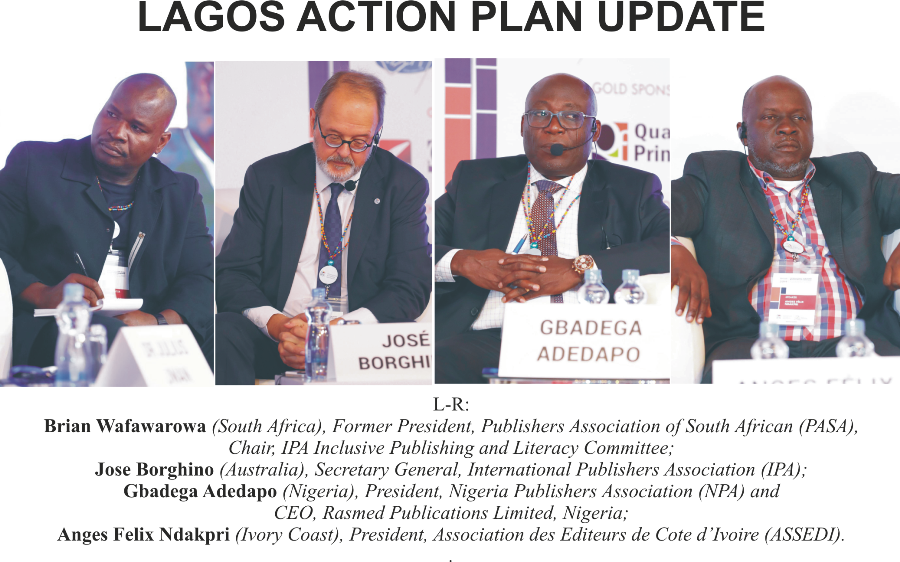
A cross-section of seasoned African publishers tasked with taking forward the commitments made during the Lagos Seminar. Originally called the Lagos Action Plan Committee, this evolved group addresses major challenges stifling the continent's vast potential to be a world publishing powerhouse.
NPA; IPA Executive Committee
Committee Chair; KPA; IPA
PASA; IPA
APNET
Nouvelles Éditions Africaines du Sénégal
Éditions Yanbow Al Kitab
Akwaba Culture Association
ADEA
When COVID-19 shut down schools and disrupted the publishing industry in 2020, Gbadega saw it not as a setback but as a catalyst. While many publishers struggled, he immediately recognized that technology was the future of educational publishing.
In his own words: "The world was not prepared for the devastating effect that followed the COVID-19 pandemic, but publishers had to adjust to the reality. Several companies had to shut down while most that thrived are those that embraced technology or that continued their operations virtually."
This conviction led directly to:
Changed the company name and mission to focus on making content accessible across ALL formats — e-books, audio books, braille, virtual learning, apps.
The comprehensive EdTech platform born from 4 years of development post-COVID. Virtual classrooms, school admin, multimedia content.
Nigeria's first AI-powered digital textbook — integrating curriculum content with AI features for notes, videos, assessments, and revision tools.
Publicly urged fellow publishers to "embrace technology for sustainability" and "seize the opportunity presented by the pandemic."
Accessible Publishers (formerly Rasmed Publications) produces a wide range of educational materials spanning different age grades, subjects, and formats. All titles are designed to align with the latest national curriculum approved by NERDC (Nigerian Educational Research and Development Council).
Curriculum-aligned textbooks for primary and secondary schools across all subjects. Colourful illustrations, teacher-pupil friendly layouts.
Early childhood education materials designed to introduce young learners to reading and foundational concepts.
Taskhar Ilimin Hausa — textbook for Junior Secondary 1-3 students, showcasing deep cultural heritage and values of Hausa society.
Started with "Ise Esu" (Devil's Handiwork) — promoting local languages to connect with readers' minds.
Digital versions of all publications available through the Accessible Publishers platform.
Integrates curriculum-approved content with AI features — notes, videos, assessments, revision tools. Works in classroom and at home.
Gbadega has spoken about the African Continental Free Trade Area (AfCFTA) and its implications for publishing. In his Borders Literature Online interview, he noted:
"The AfCFTA is by default designed to expand African trade which of course is to the advantage of the IPA plans in building African Publishing markets in the long run. The AfCFTA ratification by the Federal Government of Nigeria will be maximised if industry players could position their businesses. It will create more competitiveness within the publishing industry."
He also connected AfCFTA to education: "The AfCFTA will highly promote education and literacy levels across Africa in line with the UN Sustainable Development Goal for inclusive and equitable quality education: SDG 4."
Brain drain, high cost of production, lack of technical/financial/human capital, piracy, high foreign exchange rates, poor infrastructure.
National Book Policy, Nigerian Book Commission, Copyright Act reform, modern printing technology, digital transformation, stakeholder collaboration, inclusivity.